


25
2025
-
08
More than 200 million silver haired people! Read a report on China's elderly furniture industry in one article →
Zhiyanzhan Industry Research Institute has released the "In depth Research and Investment Strategy Planning Analysis Report on China's Elderly Furniture Industry", which is easy to understand in one article!

Elderly furniture refers to furniture specifically designed for the elderly to meet their special needs. These furniture items usually take into account the limitations of the elderly's physical and mobility abilities, as well as their needs for comfort and safety. When designing elderly friendly furniture, it is necessary to fully consider the physiological characteristics and needs of the elderly, making furniture a support for their lives. Through age appropriate design, these furniture should be able to assist elderly people in independently completing basic daily activities, improving their quality of life and autonomy. For example, the height of seats, beds, cabinets, etc. all need to take into account the physical characteristics of the elderly.

Based on the different ages and physical conditions of elderly people, elderly furniture can be finely classified. Firstly, for healthy and energetic elderly people, age friendly furniture is similar in design to conventional furniture, but incorporates age friendly elements, particularly emphasizing the comfort and harmony of the home environment. Secondly, for elderly people who are assisted in nursing care, age appropriate furniture integrates more functions on the basis of healthy care, aiming to facilitate the operation and use of elderly people and nursing staff. Finally, for elderly people with long-term disability, this type of furniture fully considers the needs of disabled or semi disabled elderly people, while also taking into account emergency medical assistance situations, reflecting a more humane design consideration.
Elderly furniture can also be classified according to furniture categories. Common types of elderly furniture include sofas, coffee tables, tables, chairs, bedding, cabinets, and other six categories. In addition, some Chinese style furniture maintains many "age friendly elements" in its design, while also considering differentiation factors, attracting the attention of the elderly consumer group with some "new Chinese style" design selling points. When choosing elderly furniture, it is also necessary to consider whether the lighting brightness in the current usage environment is appropriate, because elderly people have weakened visual function and are more sensitive to indoor light and have higher requirements.

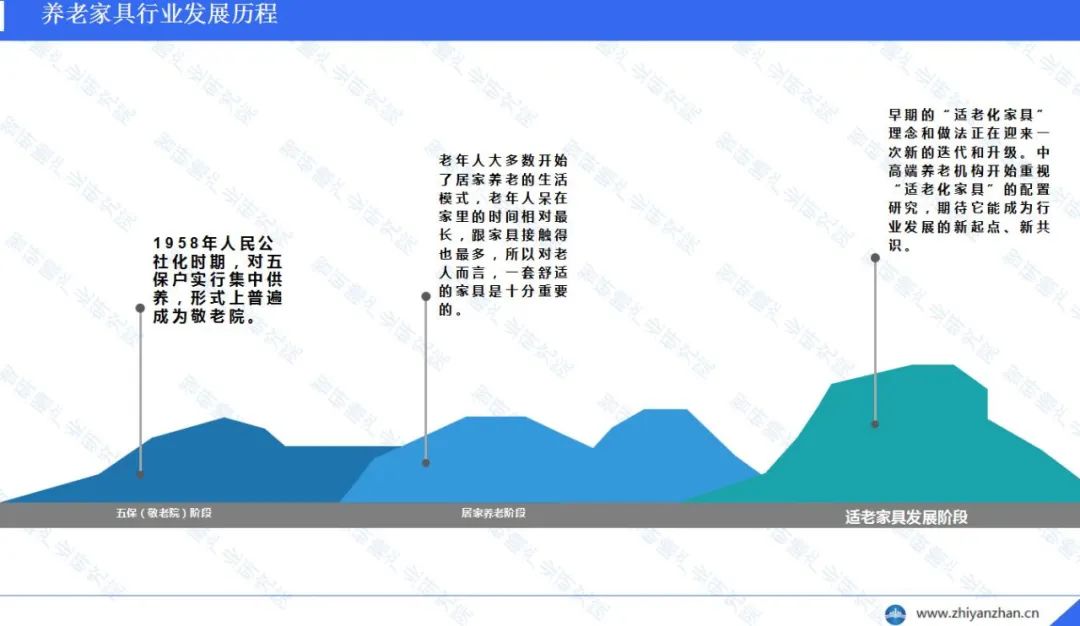
 The development process of the elderly furniture industry can be traced back to the 1980s, when the proportion of elderly population in China gradually increased, and the demand for elderly care services and facilities also increased accordingly. In order to meet the living needs of the elderly, some enterprises have started producing and selling furniture specifically designed for them, such as beds, chairs, tables, etc. With the acceleration of the aging process, the elderly furniture industry has experienced rapid development. After 2000, the government began to increase its support for the elderly care service industry and introduced a series of policy measures to encourage social capital to enter the field of elderly care services. These policies provide a favorable environment for the development of the elderly furniture industry. In recent years, with the advancement of technology and the continuous changes in consumer demand, the elderly care furniture industry has also been constantly innovating and developing. The characteristics of intelligence, multifunctionality, and humanization have gradually become the mainstream trend of elderly furniture.
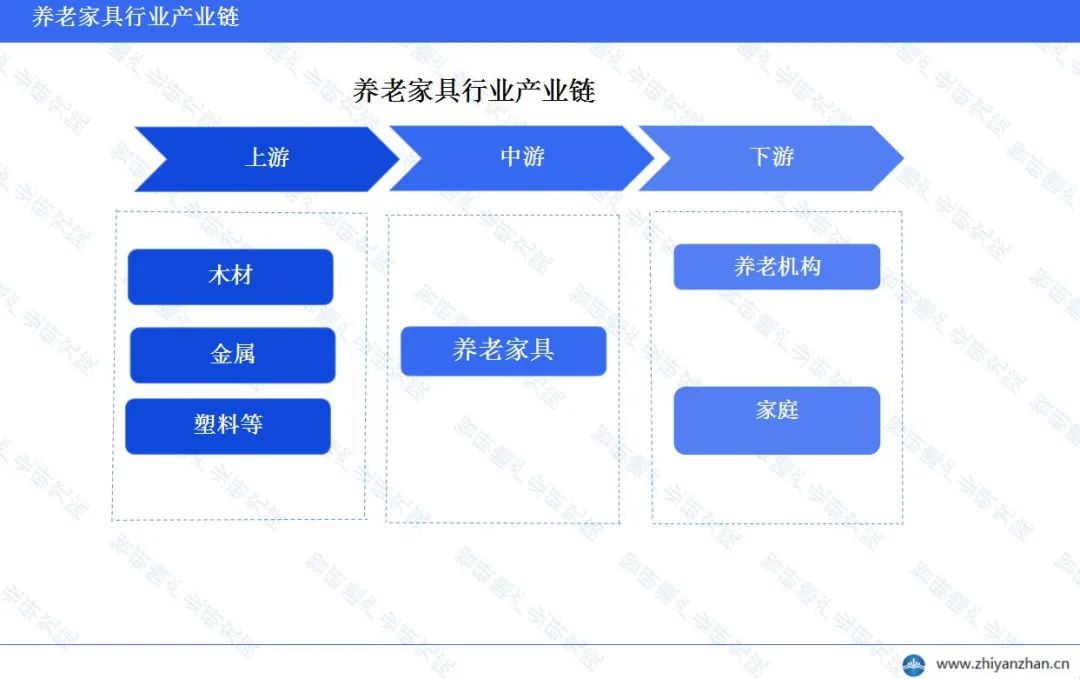
 Upstream, midstream, and downstream of the elderly furniture industry:
The upstream industry of elderly furniture mainly includes raw material supply and design research and development. The supply of raw materials includes wood, metal, plastic, etc., which need to meet environmental protection, durability, safety and other requirements. Design and development need to take into account the physical condition and usage habits of the elderly, and design both beautiful and practical elderly furniture. The downstream application industries are mainly elderly care institutions and families. Elderly care institutions such as nursing homes and nursing homes require a large amount of elderly furniture to meet the living needs of the elderly. In families, with the arrival of an aging society, more and more families are starting to purchase retirement furniture to facilitate the lives of the elderly.

Market size and growth rate of China's elderly care furniture industry
With the continuous aging of our country, the issue of elderly care is receiving increasing attention from the government, society, and families. Especially with the continuous development of China's economy and the improvement of people's living standards, the demand for elderly care services is also increasing. More and more enterprises and social organizations are starting to enter the elderly care industry and engage in elderly care services. On the one hand, it can help the government solve many social problems caused by population aging, and on the other hand, it can provide more possibilities for the development of the elderly care industry.
The National Bureau of Statistics has released data on the population aged 60 and above in China as of the end of 2018, totaling 264.02 million, and the population aged 65 and above as of the end of 2018, totaling 166.58 million. According to the trend and development of aging in China, it is predicted that by 2030, the population aged 65 and above will account for 14.8% of the total population, with elderly people aged 80 and above accounting for 13.6% of the total population. In the next decade, the total elderly population in China will reach 333 million. So, the elderly care industry is a huge blue ocean market!
As of the end of 2019, the total number of elderly care institutions in China reached 64600. Among them, the number of beds in elderly care institutions is 4.174 million, and the number of beds for elderly care is 359000. Nursing beds account for over 80% of the elderly care beds. The elderly housing market has huge potential, and it is expected that the market size will reach over 450 billion yuan by 2023, indicating a huge market space.
As of the end of 2019, the number of elderly care institutions in China was 64600 (including public and private), of which the proportion of nursing beds reached 80.86%. The size of China's elderly housing market in 2019 was approximately 450 billion yuan. The number of elderly people in China is also constantly increasing. As of the end of 2018, the number of elderly people aged 60 and above had reached 240 million, accounting for 14.2% of the total population, with approximately 148 million people aged 65 and above.
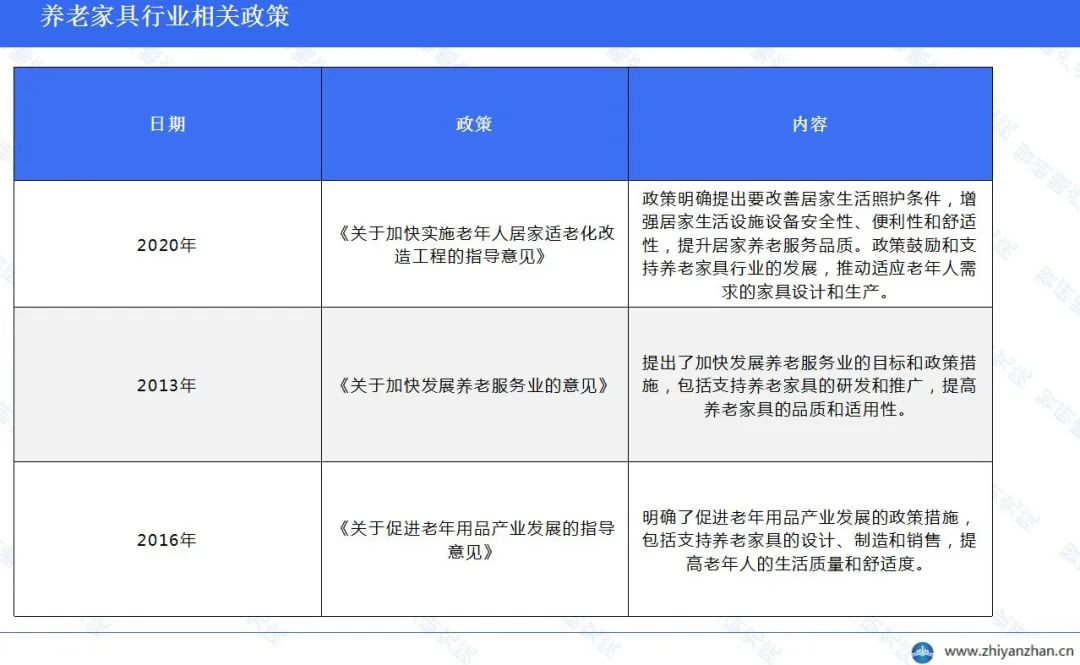
 The development of China's elderly care furniture industry has received great attention and support from governments at all levels. In the plan for the development of the national elderly care industry and the elderly care service system during the 14th Five Year Plan period, the State Council has carefully planned a series of policies to promote the coordinated development of the elderly care industry and industry, and strives to build and improve a comprehensive, inclusive, and diversified elderly care service system. These measures aim to meet the growing multi-level and high-quality health and elderly care needs of the elderly.
According to the requirements of the 14th Five Year Plan and the 2035 Vision Goal Outline, China plans to increase the proportion of nursing beds in elderly care institutions nationwide to 55% by 2025. To achieve this goal, not only have a series of supportive and normative policies been introduced at the national level, but local governments have also set development goals, focusing on improving the facilities and service quality of elderly care institutions. It is worth mentioning that the General Office of the Communist Party of China Central Committee and the General Office of the State Council jointly issued the "Opinions on Promoting the Construction of Basic Elderly Care Service System". This opinion has formulated clear directions and strategies for the construction of China's basic elderly care service system.

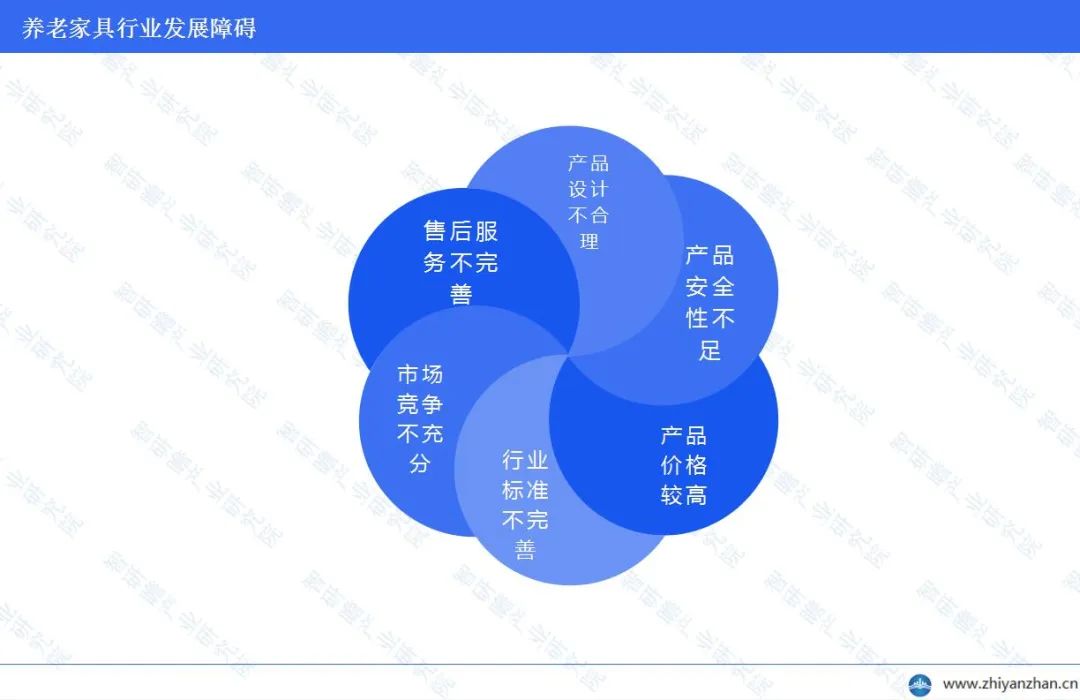
Problems in the Elderly Furniture Industry
Many designs of elderly furniture do not fully consider the special needs of the elderly, such as mobility issues, vision and hearing loss. This has led to many elderly furniture not meeting the usage habits of the elderly in actual use, and may even cause inconvenience to their lives. The safety of elderly furniture is a matter of great concern for the elderly and their families. However, some elderly care furniture on the market currently has safety hazards in terms of material and structure, such as easy tipping and sharp angle design, which pose potential risks to the lives of the elderly.
Due to the need to meet the special needs of elderly people, the production cost of elderly furniture is relatively high. However, the prices of elderly furniture in the current market are generally high, which many elderly people and families find difficult to afford. This limits the popularity of elderly care furniture and affects the development of the industry. Secondly, the standards for the elderly care furniture industry are not yet perfect, lacking unified product quality and safety requirements. This has led to uneven quality of elderly care furniture in the market, making it difficult for consumers to distinguish between good and bad products. In addition, the lack of industry standards also makes it difficult for regulatory authorities to effectively supervise the elderly furniture industry.
The market competition in the elderly care furniture industry is relatively weak, and many enterprises lack innovation awareness and competitiveness. This limits the variety of elderly furniture products on the market, making it difficult to meet the needs of different elderly people. In addition, after-sales service for elderly furniture is very important for the elderly, but due to fierce industry competition, some companies have neglected the construction of after-sales service in order to reduce costs. This has resulted in many elderly people being unable to receive timely and effective solutions when encountering problems after purchasing retirement furniture.

Prediction of the Development Prospects of the Elderly Furniture Industry
The elderly care furniture industry has broad development prospects in the future. With the intensification of the global aging trend, especially the continuous growth of the proportion of elderly people aged 65 and above in China, the demand for elderly furniture is also increasing. It is expected that by 2023, the market size of the elderly care industry will reach 12.0 trillion yuan, and the market size of elderly care furniture, as an important part of it, will also expand accordingly.
However, to meet the needs of elderly people for age appropriate furniture, providing well-designed, safe, and convenient products is key to the development of the industry, taking into account their physiological characteristics such as weakened muscle strength, decreased mobility, and memory loss. At present, some celebrity capital and teams have entered the elderly care industry, which may accelerate the development of the industry. At the same time, the country is increasingly focusing on the development of the elderly care service industry, and a series of policy plans around elderly care services are being continuously promoted, which will provide strong policy support for the development of the elderly care furniture industry.


Get a Free Quote
Welcome to contact us for the a quotation for your projects.

Hotline
OFFICE & MEDICAL CARE PROJECT:
HOTEL & ELDERLY CARE PROJECT:
Address
GUANGZHOU OFFICE ADDRESS:Room 101, Quama Park,Shibei Industrial Zone,Dashi Town,Panyu District,Guangzhou,P.R.China
FOSHAN PRODUCTION BASE ADDRESS:No.A60,Xing tang Road,Datang Town, Sanshui District,Foshan city ,China
-
WhatsApp
-
Tel
-
OFFICE & MEDICAL PROJECT
-
HOTEL & OLDERLY CARE PROJECT
